

Shockwave therapy in Bagshot and Camberley
A non-invasive treatment for some causes of chronic musculoskeletal pain, without injections, medication or surgery.
5 stars from over 300 Google reviewsHCPC registeredAXA (PPP), Bupa, Aviva, WPA, Healix, Vitality
Extracorporeal Shockwave Therapy (ESWT)
Extracorporeal (outside the body) Shockwave (high energy sound waves) therapy is a non-invasive treatment designed to treat some causes of chronic musculoskeletal pain without the need for injections, medication or surgery. It is used particularly for issues related to tendons.
Some conditions that may benefit from Shockwave Therapy:
- Achilles tendon pain
- Plantar fasciitis
- Hamstring tendon pain
- Trochanteric bursitis (pain on the outside of the hip)
- Rotator cuff tendon pain
- Tennis elbow
- Jumper’s or runner’s knee
Where is the pain?
- Heel or AchillesPlantar Fasciopathy/Plantar Fasciitis, a very common and painful condition due to irritation of the plantar fascia, and Achilles Tendinopathy.
- Hip or kneeGreater Trochanteric Pain Syndrome (sometimes known as hip bursitis), Patellar Tendon Pain and Osgood-Schlatter’s disease.
- Shoulder or elbowCalcific tendinitis of the shoulder, Tennis Elbow and Golfer’s Elbow.
- Find out whether shockwave would helpWe do require each patient to have attended an Initial Physiotherapy Consultation before going ahead with Shockwave so that we can ensure that this type of treatment is appropriate to your issue.
Conditions that may benefit from shockwave therapy
Foot and ankle
In the foot and ankle, two major conditions are appropriate for ESWT.
Plantar Fasciopathy/Plantar Fasciitis, a very common and painful condition due to irritation of the plantar fascia, a strong band of tissue under the base of the heel.
Achilles Tendinopathy, which may be non-insertional, in the body of the tendon itself, or insertional where the tendon joins the back of the heel bone.
Targeted rehab loading programmes are recommended in combination with ESWT for these conditions.
Hip and knee
Around the hip and knee, ESWT can be used to treat Greater Trochanteric Pain Syndrome (sometimes known as hip bursitis), which presents as a debilitating pain on the outer side of the hip.
It is used to manage Patellar Tendon Pain and Osgood-Schlatter’s disease, which both occur around the front of the knee.
Shoulder and elbow
In the upper limb, ESWT can be used in the management of calcific tendinitis of the shoulder, where an acute build-up of a calcium deposit in the rotator cuff tendons can be broken down by the treatment waves while initiating a healing response in the tendons themselves.
ESWT is also used for Tennis Elbow and Golfer’s Elbow, which are both tendon issues that are frequently resistant to traditional methods such as cortisone injections.
A targeted tendon rehab loading programme alongside ESWT will give the best chance at returning to your normal daily life or sport.
Shockwave alongside rehabilitation
The treatment is best and most effective following a full clinical Physiotherapy assessment and done alongside exercises to strengthen and load the tendons.
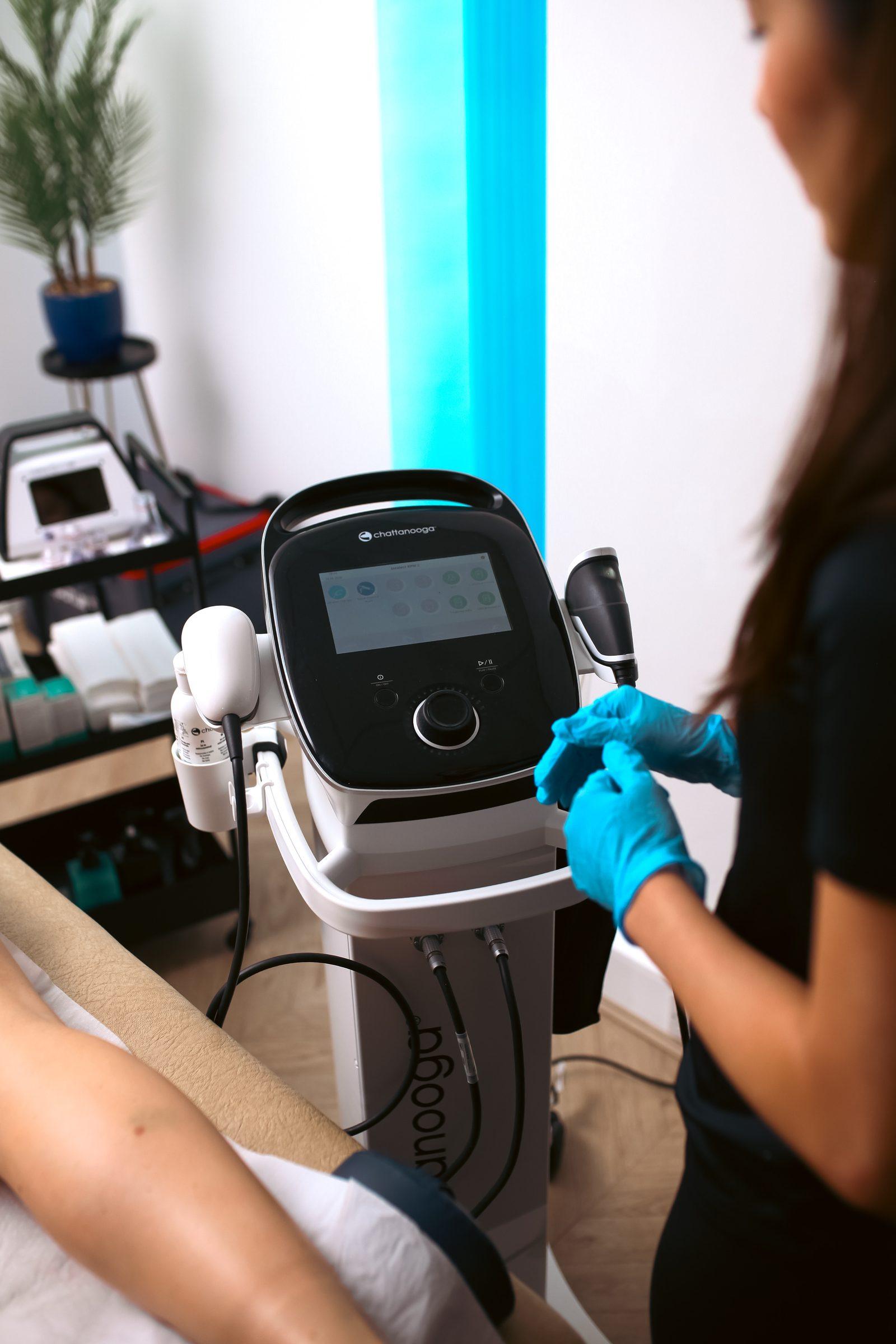
The treatment stimulates an inflammatory-like response in the tissue that is being treated. The body then responds by increasing the blood flow and metabolism to the injured area. This, in turn, accelerates the body’s own healing processes. The shockwaves break down injured tissue and calcifications. Results vary from person to person, and your physio will talk you through what to expect for your condition at your assessment.
We are delighted to have obtained the Chattanooga RPW 2 Radial Shockwave Machine, which is the newest and most advanced offering from DJO Global. This will allow us to provide the best in Shockwave therapy to our clients and in turn optimise their results.
What a course looks like
The Initial Physio Consult and Shockwave Treatment can be booked together. Just get in touch.
An initial physiotherapy consultation first
We do require each patient to have attended an Initial Physiotherapy Consultation before going ahead with Shockwave so that we can ensure that this type of treatment is appropriate to your issue.
We check it is appropriate to your issue
There are a number of occasions when Shockwave Therapy should not be used. Your physiotherapist will be able to advise you further.
A course of 3 to 6 sessions
A course of shockwave is a minimum of 3 and a maximum of 6 sessions to the affected area, 5 to 10 days apart.
Rehab runs alongside
The treatment is done alongside exercises to strengthen and load the tendons.
After each session
It is safe to carry on your regular daily activities, such as walking and driving straight after treatment. If possible, avoid exercising the treated area for 24 hours, and then you can return to normal. You may expect some mild soreness in the treated area at 2-3 days after treatment.
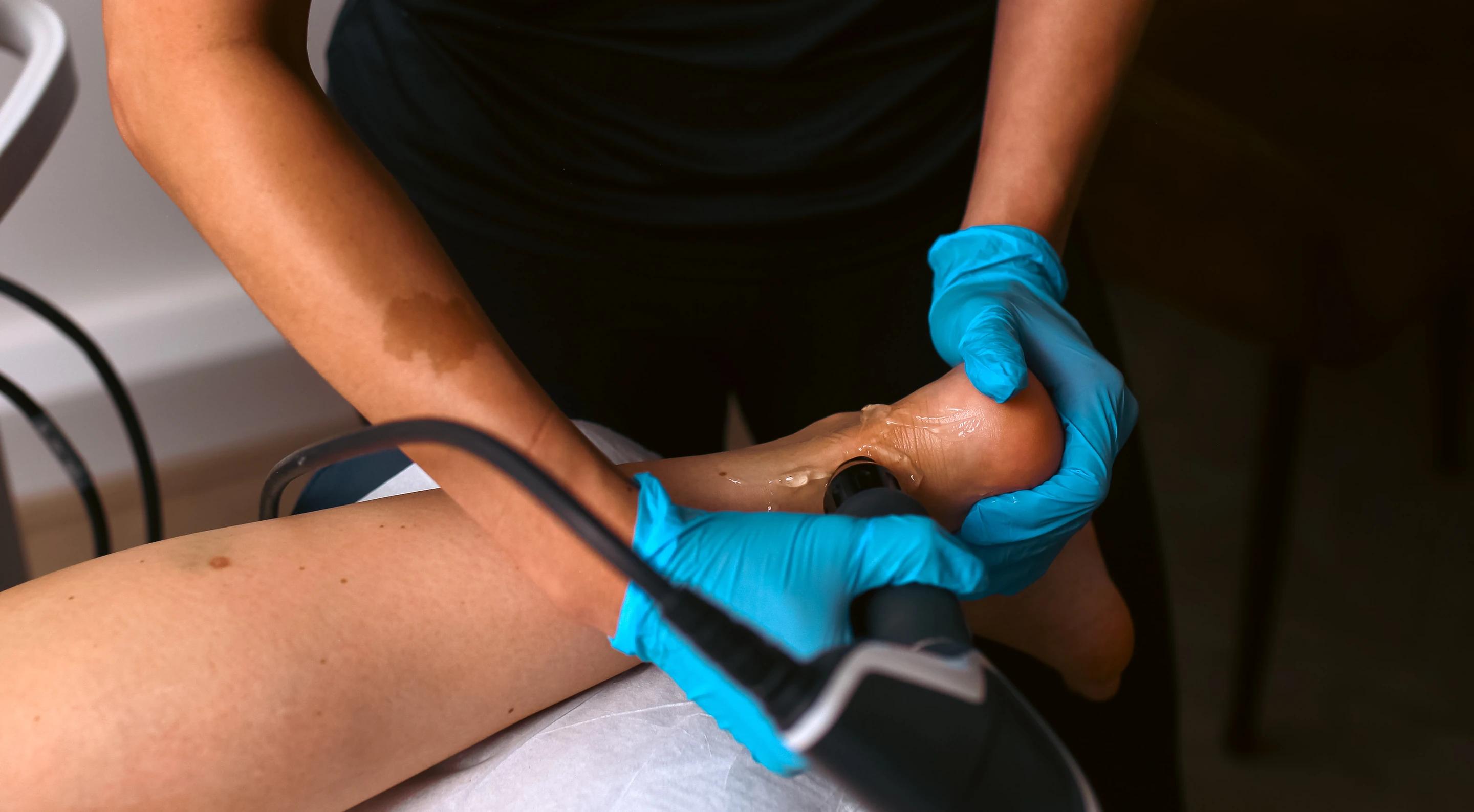
An initial assessment first
To book an Initial Assessment and find out if you would benefit from Shockwave Therapy email info@physicahealth.co.uk or call us on 01276 916 346.
- Haemophilia or other coagulation disorders
- Acute inflammation
- Disturbed sensory and nervous function, eg. diabetes
- Corticosteroid injections (wait a minimum of 6 weeks after local injections)
- Malignancy
- Prostheses and implants
Your physiotherapist will be able to advise you further.
What it costs
Please note that these prices are for the Shockwave Treatment only. We do require each patient to have attended an Initial Physiotherapy Consultation before going ahead with Shockwave so that we can ensure that this type of treatment is appropriate to your issue. A course of shockwave is a minimum of 3 and a maximum of 6 sessions, 5 to 10 days apart, and is best used alongside a rehabilitation programme rather than on its own.
That assessment also lets us give you tailored advice for your condition, such as targeted strength work or load modification, to give you the best chance of making a full recovery. The initial consultation and the shockwave treatment can be booked together: call 01276 916 346 or email info@physicahealth.co.uk.
Shockwave therapy
- 1 session
- £70
- 3 sessions
- £199
Prices are for the shockwave treatment only and do not include the initial physiotherapy consultation, which is essential.
Six questions about shockwave therapy
Which conditions can shockwave therapy treat?
In the upper limb, ESWT can be used in the management of calcific tendinitis of the shoulder, where an acute build-up of a calcium deposit in the rotator cuff tendons can be broken down by the treatment waves while initiating a healing response in the tendons themselves. Also, ESWT is used for Tennis Elbow and Golfer’s Elbow, which are both tendon issues that are frequently resistant to traditional methods such as cortisone injections. A targeted tendon rehab loading programme alongside ESWT will give the best chance at returning to your normal daily life or sport.
Around the hip and knee, ESWT can be used to treat Greater Trochanteric Pain Syndrome (sometimes known as hip bursitis), which presents as a debilitating pain on the outer side of the hip. Furthermore, it is used to manage Patellar Tendon Pain and Osgood-Schlatter’s disease, which both occur around the front of the knee.
In the foot and ankle, two major conditions are appropriate for ESWT. These are Plantar Fasciopathy/Plantar Fasciitis, a very common and painful condition due to irritation of the plantar fascia, a strong band of tissue under the base of the heel. The second condition is Achilles Tendinopathy, which may be non-insertional, in the body of the tendon itself, or insertional where the tendon joins the back of the heel bone. Again, targeted rehab loading programmes are recommended in combination with ESWT for these conditions.
How many sessions will I need?
A course of shockwave is a minimum of 3 and a maximum of 6 sessions to the affected area, 5 to 10 days apart, and is best used alongside a rehabilitation programme rather than on its own. A second course can be given at a later date if the condition relapses. Each session typically takes 15-20 minutes and is delivered by one of our Chartered Physiotherapists.
What happens after treatment?
It is safe to carry on your regular daily activities, such as walking and driving straight after treatment. If possible, avoid exercising the treated area for 24 hours, and then you can return to normal. You may expect some mild soreness in the treated area at 2-3 days after treatment.
Is shockwave therapy covered by insurance?
Many private health insurers now cover shockwave treatment at Physica Health for most conditions. Some exceptions apply. The number of authorised sessions available to you will depend on your insurer so please check with them.
Is shockwave therapy suitable for everyone?
There are a number of occasions when Shockwave Therapy should not be used: haemophilia or other coagulation disorders; acute inflammation; disturbed sensory and nervous function, eg. diabetes; corticosteroid injections (wait a minimum of 6 weeks after local injections); malignancy; prostheses and implants.
Your physiotherapist will be able to advise you further.
Which shockwave machine do you use?
We are delighted to have obtained the Chattanooga RPW 2 Radial Shockwave Machine, which is the newest and most advanced offering from DJO Global. This will allow us to provide the best in Shockwave therapy to our clients and in turn optimise their results.