

Women’s health physio in Bagshot, Surrey
Tired of quick fixes for leaks, prolapse or pelvic pain? We usually have appointments this week with one of our specialist women’s health physiotherapists. No GP referral needed.
Symptoms you’ve been told are “normal” don’t have to stay that way
Bladder leaks. A heavy or dragging feeling. Pain you’ve never quite been able to explain. So many women are told these are simply part of pregnancy, recovery, or getting older. They’re not.
With the right assessment and the right plan, most of what you’re putting up with can genuinely improve. Our specialist women’s health team gives you a private, supportive space to be heard properly and a clear path forward.
Find the help that matches what you’re feeling
Click any card for a deeper look at what’s happening, what we do about it, and what to expect.
- Bladder and bowel healthLeaking when you cough, sneeze, run or jump. Sudden urgency. The dread of needing the loo on every long drive. None of this is something you have to live with.
- Prolapse and pelvic painA sense of heaviness, pressure, or that something just doesn’t feel right. Pelvic pain that’s hard to describe but very real. We’ll explain what’s happening and what to do about it.
- Pregnancy and postnatalPelvic girdle pain. Diastasis recti. Feeling like your body isn’t quite yours yet. Whether you’re six weeks postnatal or six years on, recovery is still possible and we’ll show you how.
- Perimenopause and menopauseJoint pain that wasn’t there a year ago. Pelvic discomfort. A pelvic floor that doesn’t behave like it used to. The hormonal shift is real, and so is what you can do about it.
Bladder leaks aren’t normal. They aren’t permanent either.
Urinary incontinence is common, and most women never tell their GP. The truth is that pelvic floor physiotherapy is the first-line treatment recommended in NICE guidelines: at least three months of supervised pelvic floor muscle training (NICE NG123).
Stress incontinence happens when the pelvic floor cannot quite hold pressure during a cough, sneeze, run or jump. Urge incontinence happens when the bladder muscle contracts before you reach a toilet. Mixed is a combination of both. They almost always respond to a tailored physiotherapy programme.
- Leaking with cough, sneeze, laughing, exercise or lifting
- Strong urgency you can’t always make it through
- Going to the toilet more than seven times a day
- Waking more than once a night to urinate
- Bowel urgency, leakage or difficulty emptying
That heavy, dragging feeling has a name. And a treatment.
Pelvic organ prolapse and chronic pelvic pain are two of the most under-treated conditions in women’s health. Our specialist physios are trained to assess, explain, and treat both, often without the need for surgery.
Prolapse is when one of the pelvic organs (bladder, uterus, bowel, or vaginal vault) descends from its usual position. Grades one to four describe how much. But the grade often matters less than how it affects your life.
- Vulvodynia and persistent vulvar pain
- Dyspareunia (painful intercourse)
- Pudendal neuralgia
- Coccyx pain and post-childbirth pelvic pain
- Pain after gynaecological surgery
Recovery is possible, whether you’re six weeks postnatal or six years on.
The standard six-week postnatal GP check is brief, often misses pelvic floor and abdominal separation issues, and almost never includes a proper internal pelvic exam.
Pelvic girdle pain (PGP) affects up to one in five pregnant women to some degree (NHS). Back pain affects far more. Pregnancy-safe hands-on physiotherapy, supported strength work, and tailored advice can keep you moving and prepare your body for birth. We also offer a Pregnancy MOT at any stage, and pregnancy massage once you’ve had your 12 week scan.
The Mummy MOT® is a structured one-hour assessment for women six weeks or more postnatal, covering pelvic floor, abdominal separation (diastasis recti), posture, and core strength. It identifies issues that are commonly missed, and gives you a clear, personalised recovery plan. We also offer new mum massage and C-section scar work. Pram access, baby-friendly clinic, school-run friendly hours. Bring the little one if you need to.
Current evidence suggests waiting at least twelve weeks before returning to running, with a proper pelvic floor screen first. We use the published Return-to-Running Postnatal guidelines (Goom, Donnelly and Brockwell, 2019) to assess readiness, and progress you safely back to whatever you love doing.
C-section scar therapy
A C-section scar can feel tight, sensitive or numb long after it has healed, and many women tell us about an overhang above the scar. We do not treat how a scar looks. We work on how it moves and feels, and that can help with the overhang too.
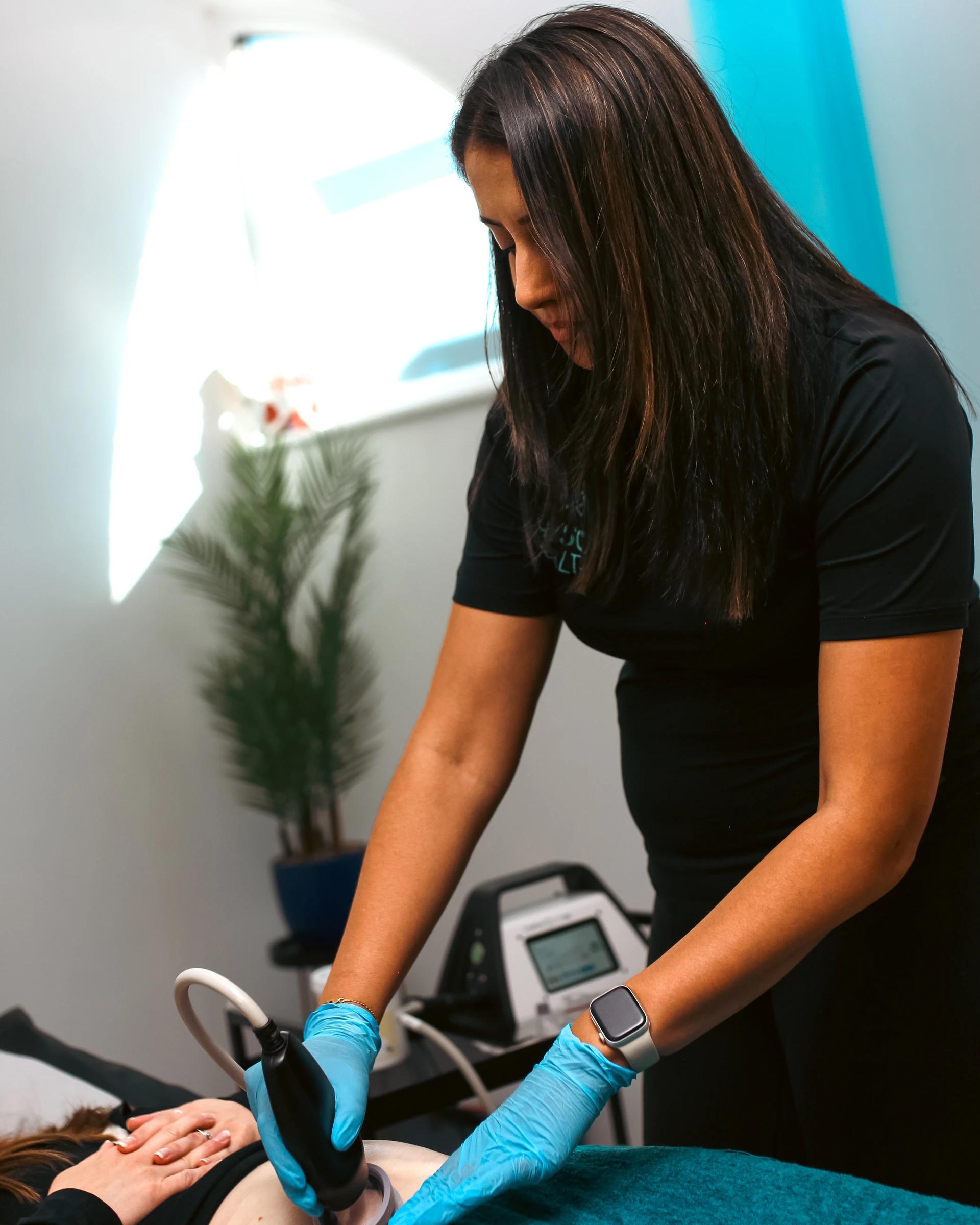
Gentle scar mobilisation and soft tissue release, at a pace that suits you.
Where it suits you, we also use LymphaTouch, a negative pressure treatment, alongside hands-on work.
Breathing, core and movement exercises, as part of your wider recovery plan.
The pelvic floor changes during menopause. Your physio should too.
Oestrogen decline during perimenopause and menopause affects the pelvic floor, joints, bone density, and muscle mass. The clinical name for the genital and urinary symptoms is Genitourinary Syndrome of Menopause (GSM). It’s common, treatable, and not just something you have to put up with.
- New or worsening urinary leakage and urgency
- Vaginal dryness, discomfort or painful sex
- New onset pelvic organ prolapse symptoms
- Joint and pelvic pain that wasn’t there a year ago
Progressive resistance training is the single most effective intervention for bone density, muscle mass, falls prevention and metabolic health in midlife. We’ll combine specialist pelvic floor work with a strength plan tailored to where you are now, and progress it safely as you build confidence.
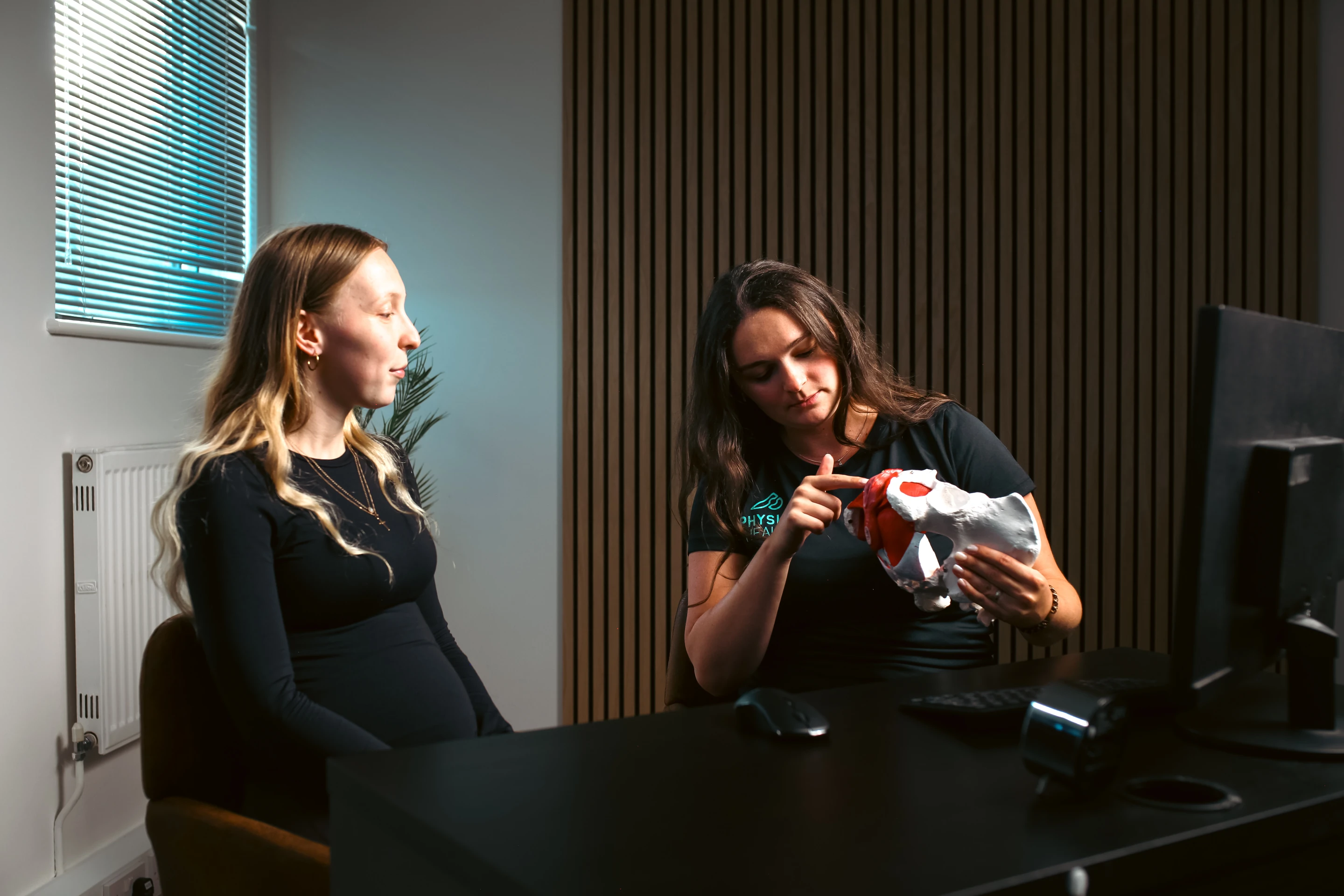
What happens at your first appointment
We see pregnancy, postnatal and pelvic health in one clinic. You might not be able to run, and separately might not be able to open your bowels, or might be leaking. The session links those things together.
Women are often surprised that there’s an internal examination and by the value it brings, because it shows how well or how badly the pelvic floor exercises are being done. That’s often the game changer.
Your initial appointment
Sixty minutes. Most women see meaningful change in four to six sessions.
Time to talk
We listen first, properly.
Your choice
We examine where appropriate, and only with your consent. An internal assessment is never compulsory.
Clear answers
We explain in plain English what we find.
Your plan
You leave with a clear, tailored plan.
£100Women’s health initial assessment, 1 hour
What your fee includes
Private paying clients enjoy a full 60-minute first visit.
Insurance-funded sessions are slightly shorter, with the same specialist physio and the same tailored plan.
Your Surrey women’s health physios
Our specialist women’s health physiotherapists. HCPC and CSP registered. Post-graduate trained in pelvic health.

Vanesha Patel
Clinical Director, Pilates and Women’s Health
POGP Certified Women’s Health Specialist and Mummy MOT practitioner, and part of the physiotherapy team at the London 2012 Olympic Games.
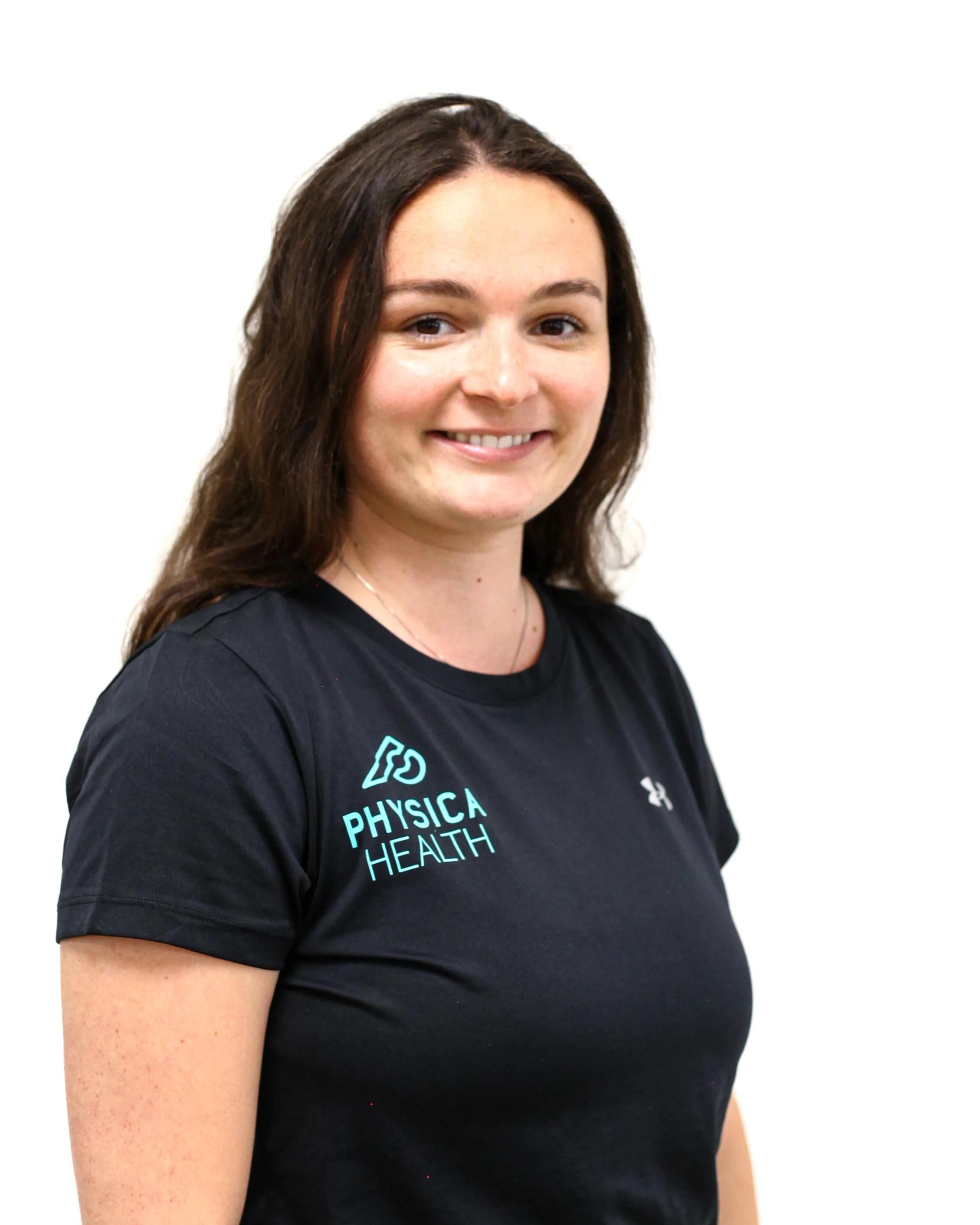
Olivia Barker
Pelvic Health Physiotherapist
Specialist training with Mummy MOT and the Pelvic, Obstetric and Gynaecological Physiotherapy group, and TPI Medical Level 3 training for golf.
What it costs
Most major insurers will reimburse your treatment. Check your policy and get a pre-authorisation code before you book.
Should I book a Mummy MOT® or a C-section scar initial assessment?
A Mummy MOT® is a full body assessment that gives you a guided plan. We assess abdominal separation, pelvic floor, your scar if you have one, how you move, posture and breathing, and you receive a report afterwards with our findings and advice. If more sessions would help, we will tell you.
A C-section scar initial assessment is centred on the scar itself. We take time to assess your movement, your breathing and the scar. Where it is indicated we can also look at abdominal separation and pelvic floor, but that is not the main focus of the session.
Book a C-section scar assessment
If you are not sure which to book, call us on 01276 916 346.
Women’s health, pregnancy and postnatal
| Appointment | Length | Price |
|---|---|---|
| Initial Assessment, 1 hour | £100 | |
| Follow up, 45 mins | £85 | |
| Follow up, 30 mins | £65 | |
| Women’s Health Online, 45 mins | £75 | |
| Pregnancy MOT | £110 | |
| Pregnancy MOT and pregnancy massage package | £175 | |
| Mummy MOT | £110 |
C-section scar therapy
| Appointment | Length | Price |
|---|---|---|
| Initial assessment and first treatment | £100 | |
| Follow up session | £65 | |
| Initial assessment plus 3 follow up treatments, save £26 | £269 | |
| 3 follow up bundle, save £15 | £180 |
Pregnancy massage
| Appointment | Length | Price |
|---|---|---|
| Pregnancy Massage (30 mins) | £45 | |
| Pregnancy Massage (1 hour) | £75 | |
| Package 5 x 1 hour | £335 |
Postnatal massage
| Appointment | Length | Price |
|---|---|---|
| 1 hour | £75 | |
| 30 minutes | £45 | |
| 5 x 1 hour package | £335 |
What our patients say on Google
★★★★★5 stars from over 300 reviews on
- ★★★★★
I wasn’t sure what to expect from my C-section scar treatment, but I was amazed by the results after just one session. I had been experiencing tugging, pulling and tightness around my scar, and afterwards I was surprised by how much movement and mobility I had regained - I could no longer feel the same pulling and tightness around the scar. Vanesha was incredibly passionate and knowledgeable, taking the time to explain the treatment and answer all of my questions. Throughout the session, she regularly checked that I was comfortable, which made me feel very well cared for. Her calm, friendly and professional manner immediately put me at ease and I felt completely supported throughout the treatment. For me, the biggest benefit was the improvement in movement and easing of the tightness around my C-section scar. I would highly recommend Vanesha to anyone considering treatment.
Abi Chapman - ★★★★★
Postnatal care from highly experienced physio Vanesha at Physica Health has been brilliant. Vanesha is incredibly knowledgable, supportive, compassionate and results-focused. She has worked tirelessly to deliver highly personalised care and always goes above and beyond to maximise our time in sessions. I can’t recommend Vanesha highly enough. The team at Physica are brilliant - Zara and Amy have been fantastic and I cannot recommend this team enough. The whole team have been so helpful with liaising with insurance too in order to get the best possible outcomes for me. If you’re able to, prioritising postnatal physio with this team can make a huge difference to recovery.
Charlotte Thompson
The seven things every woman asks us
Do I need a GP referral?
No. You can book directly with us as a self-paying or insured patient. No GP letter, no two-week wait.
If you’d like us to liaise with your GP after the assessment, we’re very happy to.
I’m on the NHS pelvic floor waiting list. Can you see me sooner?
Yes. The NHS pelvic health waitlists we see across Surrey and Hampshire are six to eighteen months. Most of our new women’s health patients are seen within seven days.
You can stay on the NHS waitlist while seeing us privately. Many women do exactly that.
Will my private health insurance cover this?
AXA (PPP), Bupa, Aviva, WPA, Healix and Vitality all reimburse women’s health physiotherapy with us. Most policies need a pre-authorisation code, which takes minutes.
Call us on 01276 916 346 if you’d like help checking your specific policy.
Will the assessment be internal? Do I have to consent?
An internal pelvic floor assessment is the gold standard for accurately understanding pelvic floor strength, coordination, prolapse and pain. But it is never compulsory.
We’ll only suggest it if it’s clinically appropriate, and only proceed with your full, informed consent. There’s a great deal we can do without it if you prefer.
How many sessions will I need?
Most women see meaningful change in four to six sessions. Some need a single follow-up after a thorough assessment. Some prefer ongoing support across pregnancy and postnatal.
You’ll get an honest answer, tailored to your symptoms and goals, at the end of your first appointment.
How much does it cost?
A women’s health initial assessment is £100 for the hour. Follow-ups are £85 for 45 minutes or £65 for 30 minutes, and an online women’s health appointment is £75 for 45 minutes. The Mummy MOT® is £110.
Most major insurers will reimburse your treatment. Check your policy and get a pre-authorisation code before you book. You’ll find every price on our pricing page.
What should I bring or wear to my appointment?
Wear something you can move comfortably in. Loose-fitting trousers or leggings and a comfortable top are perfect. If you have any imaging, scans or letters from your GP or consultant, please bring them.
If you’re insured, bring your policy details and pre-authorisation code if you have one.